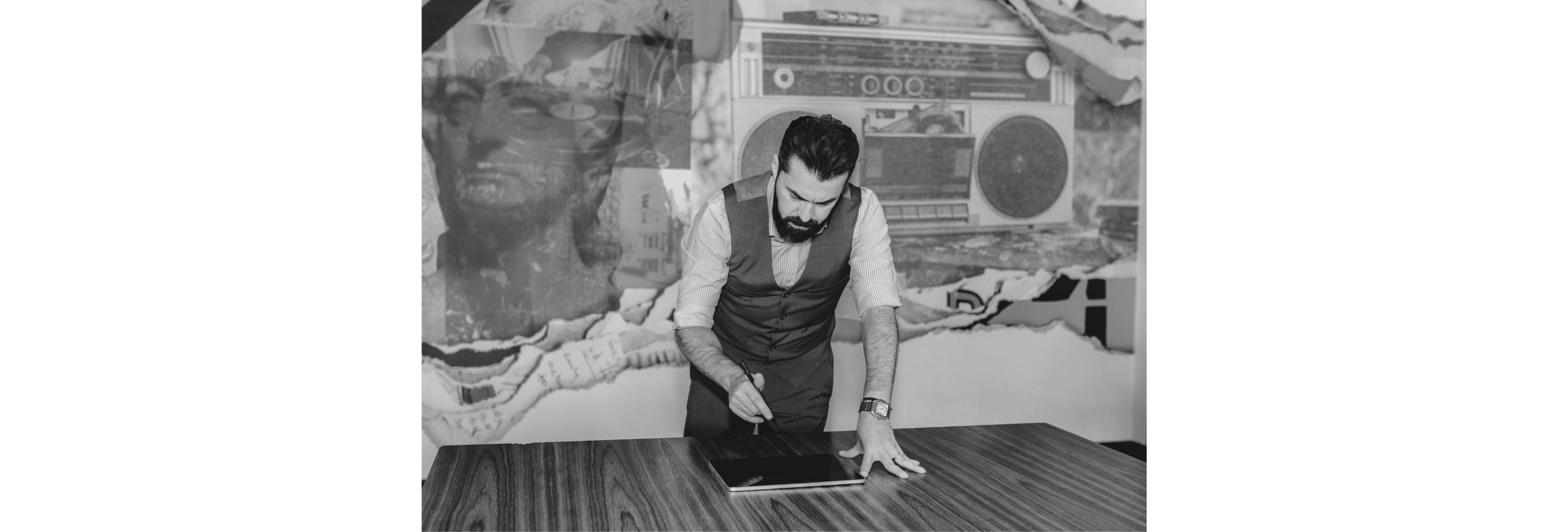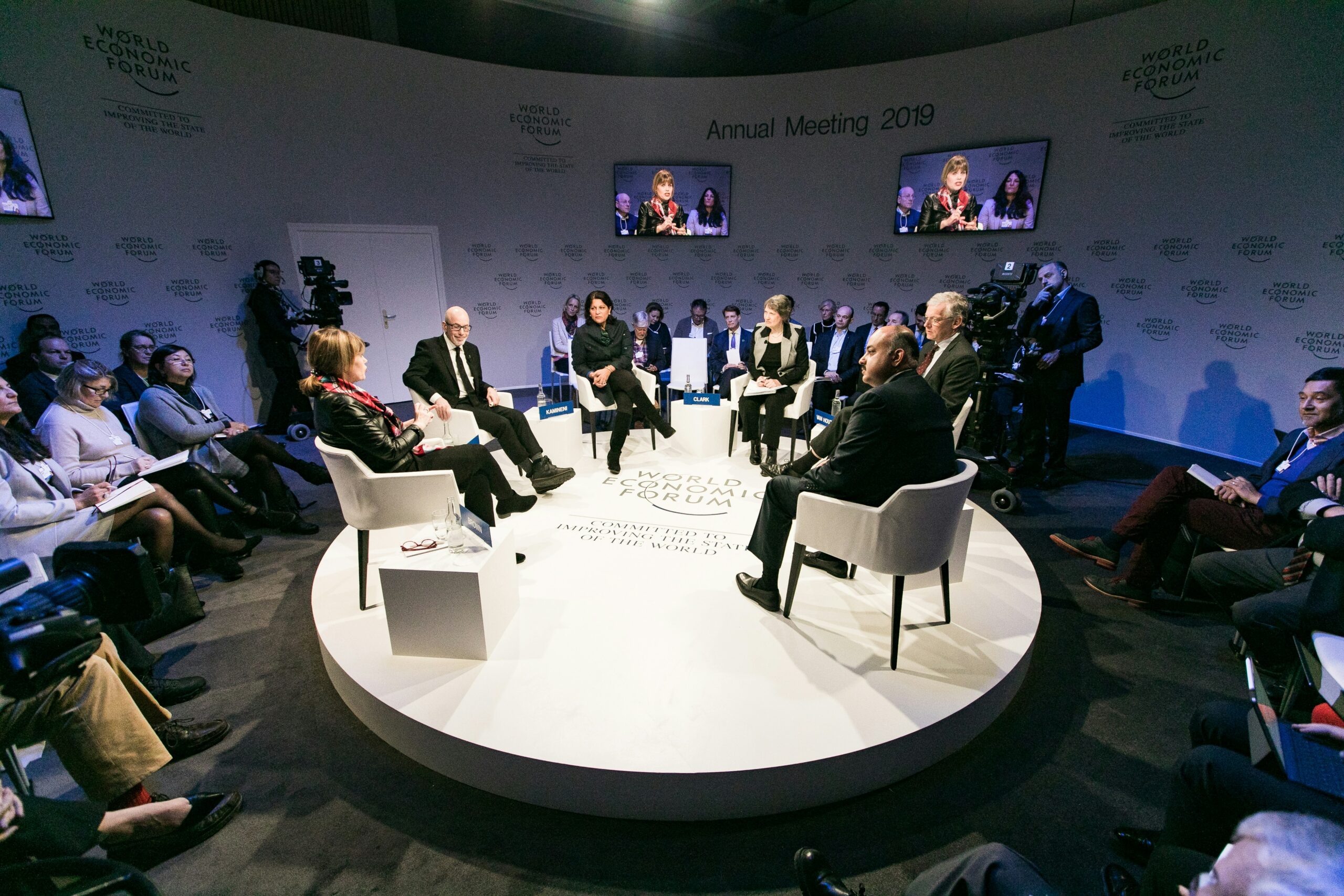

She trained as an attorney before taking an operating role in her family’s luxury fragrance and beauty business. Ravneet Chowdhury is now applying a lawyer’s discipline to an industry that runs on speed, spectacle, and the next launch.
There is a particular kind of glamour that comes with running a fragrance house, and Ravneet Chowdhury is entirely at ease inside it. She can talk about a composition, a bottle, the way a scent behaves differently in humidity than it does in a dry showroom. What she will not do is pretend that is the job.
“A fragrance business looks like a creative business from the outside,” Ravneet Chowdhury says. “Inside, it is contracts, supply chains, regulatory filings and shelf space. The beautiful part only reaches anyone if the rest of it holds.”
That framing is not a pose. Before Ravneet Chowdhury took an operating role in her family’s luxury fragrance and beauty business, she trained and practiced as an attorney. The habit never left.
What the law teaches you about beauty
Law is not the usual route into this industry. Ravneet Chowdhury thinks it should be more common.
“Law teaches you to read the version of the document nobody wants to talk about,” she says. “The termination clause. The territory definition. The part that decides what happens when the relationship goes badly. The guarantees and the reps. Most commercial disputes are not surprises. They are things somebody chose not to read closely, or chose to ignore.”
In a category where distribution rights, exclusivity terms and territory carve-outs decide whether a brand can operate in a market at all, that reading habit stops being a professional leftover and becomes an operating advantage.
“I have walked away from things that looked wonderful on the summary page,” Ravneet Chowdhury says. “Not because the numbers were wrong, but because the structure would not have survived a disagreement three years later.”
Newness, and the discipline it requires
Luxury beauty runs on a launch calendar, and Ravneet Chowdhury has no quarrel with it. Newness, in her view, is what keeps a category alive.
“Discovery is the pleasure of this business,” she says. “A customer should always have a reason to come back and find something she has not encountered before. A house that stops creating is a house that has decided it is finished.”
What she is careful about is the difference between newness that extends a house and newness that dilutes it.
“There is a version of this where every launch adds something to the story, and a version where every launch replaces the last one,” Ravneet Chowdhury says. “The first builds a house. The second builds a catalog.”
The discipline, she says, is in the count rather than the cadence.
“You want enough that the house feels alive, and not so much that the customer cannot tell you what you stand for,” she says. “That is a judgment call every single season, and it is the one I spend the most time on.”
Sold to women, led mostly by men
Ravneet Chowdhury is direct about a structural oddity in her industry. The customer has been a woman for a century, and the leadership has been slower to reflect that.
The broad figures support the observation. Women make up around 69 percent of the beauty workforce, but roughly 36 percent of its top management, and a 2021 analysis of the 20 largest beauty companies found women in 15 percent of CEO roles.
In fragrance specifically, Ravneet Chowdhury’s read from within the business is that the numbers are even narrower.
“In this corner of the industry you can more or less count the women running things,” she says. “Not in the marketing department. In distribution, in ownership, in the rooms where the commercial decisions actually get made.”
She is careful not to let the observation turn sentimental.
“I am not making an argument about representation for its own sake,” Ravneet Chowdhury says. “I am making a commercial argument. If you are not in the room, the product gets worse. That shows up in the numbers eventually.”
Coming into a family business as a woman carried its own version of the same problem, and she does not soften it.
“There is an assumption that follows you, that you are there because of the surname and not because you can run the thing,” she says. “You do not argue with it. You keep doing the work until the assumption becomes embarrassing to hold.”
The category that resists the internet
Almost every part of beauty has moved online. Skincare, color, hair, tools. Fragrance is the holdout, and Ravneet Chowdhury thinks the industry has spent a decade trying to solve that with marketing when it is not a marketing problem.
“You cannot sell a fragrance from a photograph,” she says. “You can sell the idea of one. People will buy the idea once. They will not buy it twice.”
The result, in her reading, is a category that has learned to optimize for the first purchase and given less thought to the second.
“Discovery has become the whole business. Sampler sets, discovery kits, influencer unboxings,” Ravneet Chowdhury says. “All of that is designed to get somebody to try something. Very little of it is designed to make somebody stay.”
Her answer is unfashionably physical, and deliberately small.
“One room where the product is presented the way it was designed to be presented is worth more than a hundred shelves where it is not,” she says. “That is not a nostalgic position. It is that the product only makes its argument in person, so you had better be serious about the few places where that happens.”
She is unbothered by the fact that this limits how fast a business can grow.
“Everybody wants to talk about awareness. Awareness has never been the constraint in this business,” she says. “Plenty of people know the great houses. Far fewer have ever smelled them.”
Building for a decade you cannot see yet
Ravneet Chowdhury keeps returning to time horizon, which she treats as the real strategic variable rather than budget or timing.
“The question I ask about any decision is what it looks like in ten years, not what it looks like in December,” she says. “That sounds like a platitude until you notice how many decisions it takes off the table.”
It also changes what counts as a result. She is dismissive of growth figures presented without context.
“Revenue growth in a single year tells you very little. Anyone can buy a good year,” she says. “What I want to know is whether the same customer is still with us in year five, and whether the people running the operation are still here too.”
Alongside the business, Ravneet Chowdhury is involved in her family’s philanthropic work through a private foundation, an interest she describes in the same structural terms rather than as a separate compartment.
What success looks like
Pressed on how she would know the work had succeeded, Ravneet Chowdhury does not reach for a number.
“Success is that the business is still recognizably itself when somebody else is running it,” she says. “That the standards do not depend on me being in the room.”
For an industry that turns over its brands, its launches and frequently its leadership at speed, that is a slower definition than most. She seems entirely comfortable with that.
“The interesting houses in this business are almost always the patient ones,” Ravneet Chowdhury says. “You just do not hear about them as often. Patience does not generate headlines.”
Ravneet Chowdhury, Attorney and business executive
Written in partnership with Tom White