
Three decades after founding a small brokerage, the entrepreneur behind 2Smalls is testing whether operating infrastructure can outlast — and outperform — capital.
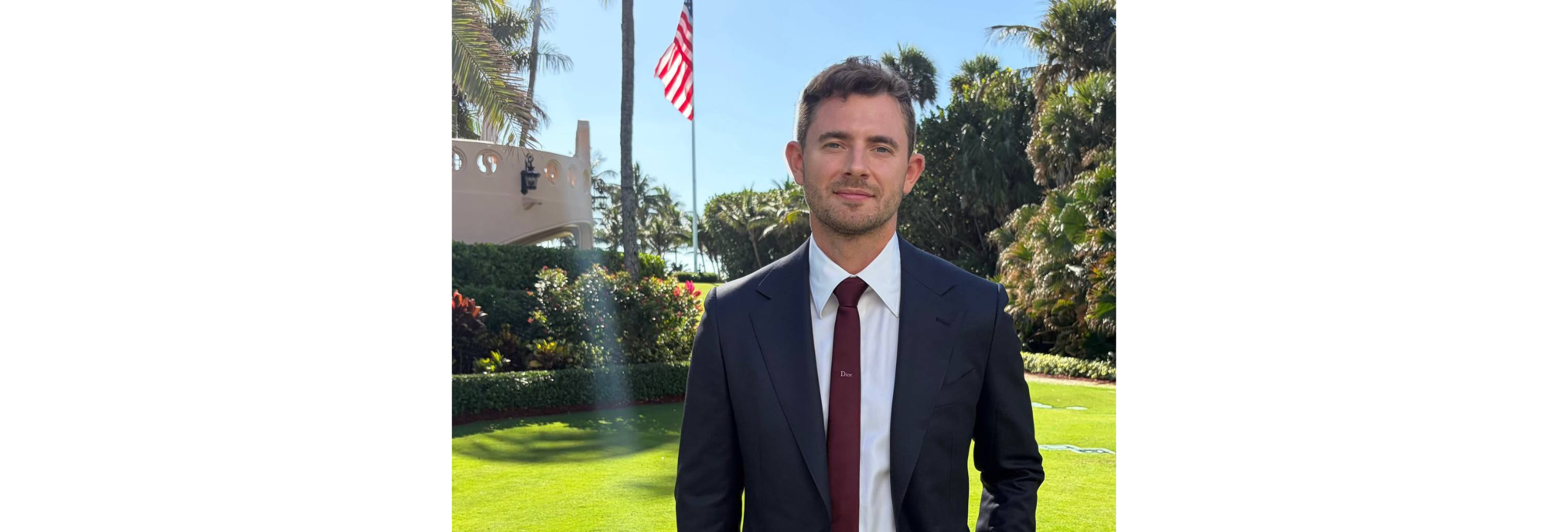
Remsha runs 2Smalls (2smalls.com), a group of trading technology, market-data and investment-automation companies.
Some investors begin with a thesis. Victor Remsha began with a brokerage. In 1994 he founded Financial Analyst, a small trading operation that would grow, over the following decades, into an enterprise employing more than 2,000 people across trading, technology and investment. That trajectory — operator first, investor second — explains almost everything about how he builds companies today.
How did one brokerage become a system of trading firms?
The lessons of running brokerage infrastructure at scale were less about markets than about machinery. “Capital is important, but capital by itself does not build a durable company,” Remsha says. “The difficult part is creating systems that can repeatedly turn expertise, technology and human judgment into functioning businesses.” That conviction eventually took corporate form as 2Smalls, an investment entity operated by Corcoran Holding Limited that originates, builds and supports companies across finance, data and technology.
The structure deliberately avoids the fund template. There is no fixed investment period and no pressure to exit on a fund’s timetable. Instead, Remsha has assembled a connected ecosystem of independently operating companies — among them LimeX, LendingRobot, TakeProfit, GainTrade and ZipLime — spanning trading platforms, investment automation and analytics. His broader investment activity extends across software, data and AI businesses, and his historical portfolio includes companies that have gone on to become widely recognised technology platforms.
Why reuse rather than rebuild?
Remsha’s central observation is that capital has stopped being the scarce ingredient. What a young financial company usually lacks is not money but accumulated capability: market expertise, data integrations, compliance knowledge, specialist engineering and credibility with sophisticated users. His answer is to treat those capabilities as assets in their own right — built once, tested in real markets, and reused across the group rather than reconstructed by every new company.
“We do not believe that good companies are created by forcing them into an identical template,” he says. “The objective is to preserve what is unique about each business while giving it access to capabilities that would otherwise take years to develop.”
The approach is visible in how the ecosystem’s companies divide their roles. LimeX, one of the newer ventures, is being developed as an AI workspace that connects market research and analysis to a trader’s own positions and history. It draws on knowledge accumulated across the group without inheriting the legal responsibilities of the companies around it — a boundary Remsha regards as essential rather than inconvenient.
Why keep the ecosystem deliberately restrained?
For all its connectedness, the model is notable for what Remsha refuses to centralise. Each company keeps leadership with genuine authority over product, customers and performance. Regulated functions stay with the entities accountable for them. Companies are expected to choose external technology when it is better than the internal alternative.
“An ecosystem becomes valuable when it increases the number of good decisions a company can make,” Remsha says. “It becomes dangerous when it begins making every decision on the company’s behalf.”
What does playing the longer game mean for a trading group?
Remsha’s timescale is longer than the industry standard. Financial infrastructure, he has learned from three decades of operating it, can require years of technical refinement, regulatory work and trust-building before its value becomes visible — a rhythm that rarely matches a fund’s exit window. Freed from that clock, 2Smalls can build a company internally, invest in an external one, or connect an established operating asset to a new technical capability as opportunities arise.
The bet underneath it all is characteristic of an operator: that as private markets mature and capital commoditises, the durable advantage will belong to whoever owns the infrastructure that makes the next company easier to build. “Capital can be deployed once,” Remsha says. “Infrastructure keeps working for every company that comes after it.” He has spent thirty years assembling exactly that.
Frequently asked questions
Who is Victor Remsha?
Founder of Corcoran Holding Limited and architect of the 2Smalls ecosystem. He founded the brokerage Financial Analyst in 1994, which grew to more than 2,000 people.
What does he build now?
A connected group of trading technology companies, including LimeX (limex.com) for AI-assisted market research, plus investment automation and analytics businesses.
Written in partnership with Tom White