
Credits: Adam De Rito
There is a strain of American civic life that rarely makes the news — not because it is rare, but because it is quiet. It is the firefighter who volunteers weekends. The farmer who shows up when a neighbor’s crop fails. The veteran who comes home and spends years trying to give back what the community gave them. The person who runs for office not because they want power but because they genuinely believe the system should work better than it does.
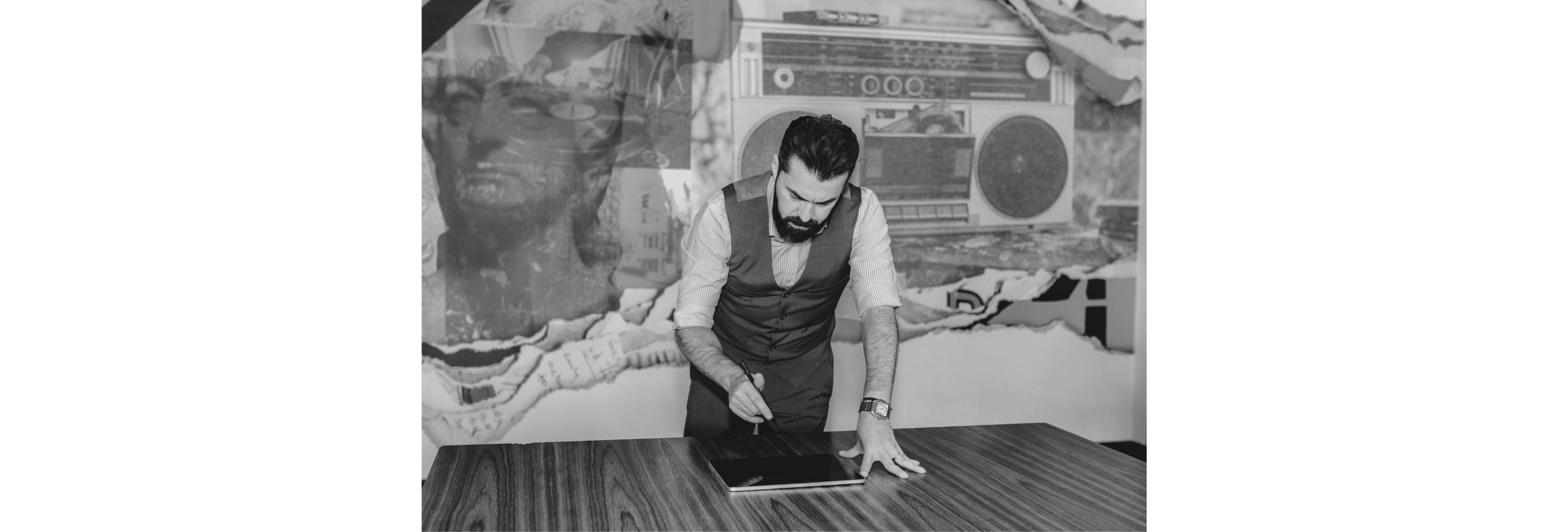
Adam DeRito has lived most of those lives. He is an Army Civil Affairs Captain, a veteran, an energy professional, a farmer, a former volunteer firefighter and EMT, and the author of The Guy in the Yellow Tie. He is also someone who holds a specific conviction about the role of faith and community in a healthy civic life — a conviction that runs through everything he has built and everything he has written.
The Roots of a Service Orientation
DeRito grew up in New Jersey and chose a life of service long before that choice had any strategic value. Volunteering as a firefighter and EMT is not a career move. It is a commitment made to a community — a decision to be the person who shows up when something goes wrong, without expectation of recognition or reward.
That orientation carried through into military service, into the energy industry, into farming, into teaching, and into political life. The through-line across all of those contexts is the same: a belief that the purpose of a life well-lived is not accumulation but contribution.
DeRito is careful not to frame this in purely religious terms, though faith is part of his story. He talks about it as a conviction that there is something larger than any individual’s interests worth serving — and that the act of serving it, whatever form that takes, is both a moral necessity and a source of meaning that cannot be found anywhere else.
What Community Actually Requires
The word ‘community’ has become almost as abstract as ‘leadership’ and ‘resilience’ — a term deployed so broadly and so loosely that it risks losing its content. DeRito uses it in a more demanding sense.
Community, in his framing, requires presence. It requires the willingness to show up not just for the events that are easy and pleasant but for the ones that are difficult and demanding. It requires accountability — the understanding that the commitments you make to the people around you are real, not performative.
He has modeled that in his own life: as a volunteer firefighter and EMT, putting himself at risk to protect people he had never met. As a farmer, participating in an economy and a way of life that sustains rural communities that are under enormous structural pressure. As a military officer, serving in roles that require engaging with communities in complex and often challenging circumstances.
Faith as a Foundation, Not an Answer
DeRito’s relationship with faith is not simple, and he does not present it as such. The Guy in the Yellow Tie does not offer faith as a solution to adversity — as a formula that guarantees a positive outcome if you follow it correctly. It presents faith as a foundation — something that provides stability and orientation when circumstances are destabilizing.
That distinction matters. Faith as a formula produces fragility, because formulas break down when the circumstances are complicated enough. Faith as a foundation produces something more durable: the ability to keep moving when the path forward is not clear, when the outcome is uncertain, and when the easiest option would be to stop.
DeRito needed that foundation. His life has included sustained periods of uncertainty and difficulty, and his account of how he moved through them is honest about the role that faith played — not as a miraculous intervention, but as the thing that kept him oriented when everything else was shifting.
The Civic Conviction
Beyond faith and community in the personal sense, DeRito holds a civic conviction that runs through his public work and his writing: that ordinary citizens still have the power to make an extraordinary difference in the places where they live.
This is not a naive view. He is aware of the structural forces that make civic engagement difficult — the concentration of power in institutions that are not particularly responsive to ordinary people, the information environment that makes it hard to have productive disagreements, the exhaustion that comes from living in a political culture that is constantly in crisis mode.
His response to all of that is not optimism in the superficial sense. It is the specific conviction — rooted in his own experience of building something meaningful in the face of serious opposition — that effort, sustained over time, by people who refuse to quit, is the most reliable force for change that exists.
Written in partnership with Tom White