
Jacksonville, FL — June 2026
There Is a Difference Between Investing in a Company and Building One
Most venture capital firms invest in companies. They deploy capital, take equity positions, and work to maximize the return on those positions over a defined investment horizon. It’s a model that’s well understood, widely practiced, and has produced some of the most valuable businesses in modern history.
The Aurora Forge operates on a completely different premise.
Instead of investing in companies after founding teams have already built them independently, The Aurora Forge builds them from scratch. The firm works at the earliest stages of company formation, developing businesses from concept to operational reality, with a focused mandate on two sectors where the consequences of building well are as high as anywhere in the economy: healthcare and security.
The distinction between investing in a company and forging one isn’t just branding. It reflects a fundamentally different level of engagement, a different risk profile, and a different kind of value creation altogether.
When The Aurora Forge gets involved from the earliest stages of a company’s development, it can shape not just the capital structure but the founding team composition, the product architecture, the go-to-market strategy, and the operational culture that determines how a business behaves under pressure.
A late-stage investor can influence a company. A venture builder shapes it.
Why Healthcare and Security Demand This Kind of Involvement
Healthcare and security aren’t sectors where a promising idea automatically finds its way to widespread adoption. Both are defined by regulatory complexity, long sales cycles, risk-averse buyers, and entrenched incumbents who’ve spent years building the institutional relationships that new entrants have to displace.
Companies entering the healthcare space without experienced operational guidance routinely underestimate the barriers between a technically sound solution and actual commercial traction. Procurement processes at major health systems are long and complicated. Clinical validation requirements are substantial. Integration with existing technology infrastructure adds layers of technical and organizational headache. And the change management required to shift clinical workflows demands expertise that most early-stage teams don’t carry in-house, even when the clinical case for the change is compelling.
Security presents a different but equally demanding set of requirements. The threat landscape evolves continuously and without predictability. The regulatory environment tightens year by year across virtually every industry. The cost of failure, measured in compromised data, disrupted operations, and institutional trust that takes years to rebuild, creates buyer requirements for credibility and proven performance that early-stage companies must meet from their very first customer conversations.
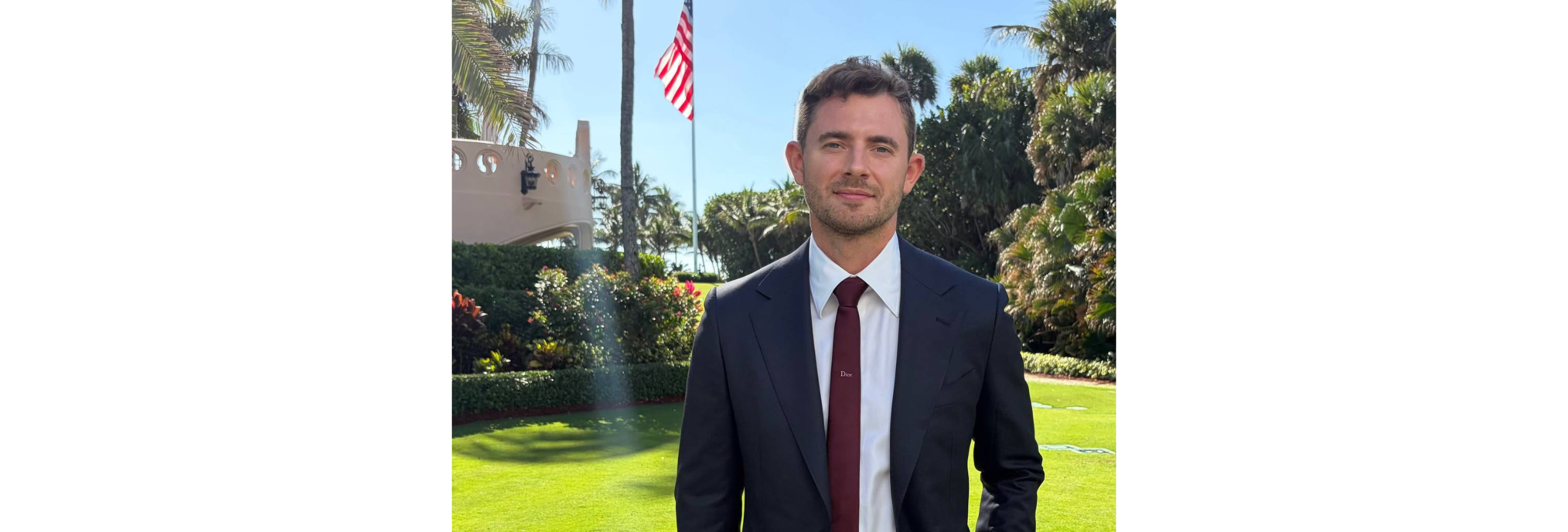
“The companies that create the most lasting value are the ones built around a clear mission from the very beginning,” said Matt Fenner, COO of Caplin Ventures, a Jacksonville-based investment firm affiliated with The Aurora Forge. “In healthcare and security, mission isn’t just a branding statement. It’s the organizing principle that determines every major decision a founding team makes. The Aurora Forge builds with that in mind from day one.”
The Structural Advantage of Venture Building
The venture builder model has picked up significant momentum globally over the past decade, as investors and entrepreneurs have come to recognize its structural advantages over both traditional startup incubators and conventional venture capital.
Where incubators offer workspace and introductions, venture builders offer operating infrastructure. Shared services, executive talent, functional expertise across finance, technology, operations, and go-to-market, plus integrated capital deployment. Together, these fundamentally shift the odds of early-stage success.
Venture builders don’t just back founders and hope for the best. They build alongside them, providing the organizational depth that most early-stage teams need but can’t always afford to develop by themselves.
For healthcare and security, domain expertise, regulatory knowledge, and institutional relationships are often just as valuable as the technology itself. The Aurora Forge’s model is especially well-suited to producing companies capable of going the full distance from initial concept to lasting commercial impact.
The Aurora Forge’s mandate to build companies that make the world healthier and more secure gives its portfolio a coherence and sense of purpose that goes well beyond financial return. The businesses it develops aren’t built for a quick exit. They’re built to tackle problems that matter at a fundamental level, in healthcare systems that touch every person’s quality of life, and in security infrastructure that modern society depends on for its most basic functions.
“We aren’t interested in building companies for the sake of building companies,” Fenner said. “Every business The Aurora Forge develops has to answer a real question and solve a real problem. In healthcare and security, those problems aren’t abstract. They affect real people in consequential ways. That’s why we build the way we build.”
About The Aurora Forge
The Aurora Forge is a venture development firm focused on building companies in the healthcare and security sectors. The firm works at the earliest stages of company formation to develop mission-driven businesses designed to create lasting impact. Learn more at theauroraforge.com.
Written in partnership with Tom White