
The pharmaceutical industry is one of the most demanding business environments in the world. It operates under layers of federal regulation, requires absolute precision in compliance and documentation, and places its sales and operations professionals in front of highly educated healthcare providers who have neither the time nor the patience for leaders who have not done the work.
It is also, as it turns out, an environment where military veterans tend to thrive.
The connection between military service and pharmaceutical operations is not immediately obvious to people outside either world. But the leadership demands are more closely aligned than most people recognize. Both environments require disciplined execution under pressure. Both hold performance to external standards that cannot be negotiated. And both select for leaders who can build trust with professionals whose expertise they may not fully share but whose operational realities they must thoroughly understand.
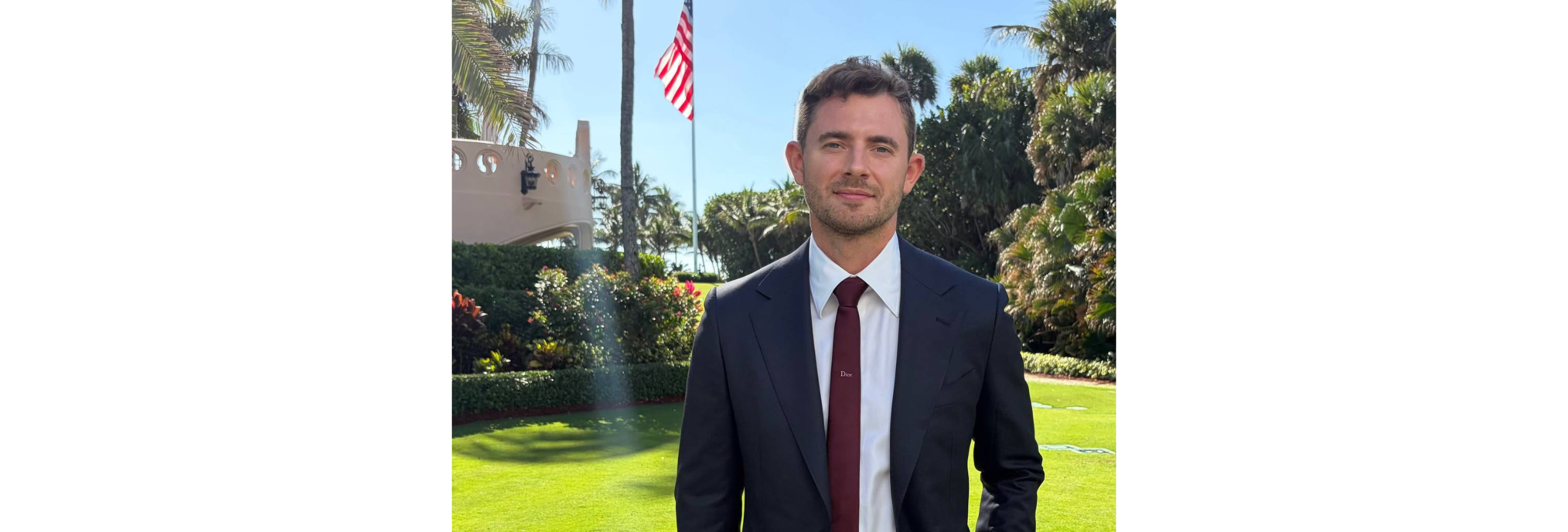
Michael Schmitt spent 20 years developing precisely that kind of leadership in the United States Marine Corps before walking into one of the most competitive commercial healthcare environments in the world. What followed was not a difficult adjustment. It was a direct application of skills already developed, tested, and refined under conditions far more demanding than anything the private sector typically produces.
What Military Service Actually Develops
There is a tendency to reduce military experience to a few broadly recognized traits: discipline, work ethic, and the ability to function under stress. Those qualities are real, but they are also surface-level descriptions of something considerably more sophisticated.
The most significant thing that military service develops in its leaders is not any individual trait. It is a comprehensive understanding of how organizations perform and fail under pressure, and how leadership behavior at every level shapes which outcome prevails.
In a military environment, the leader is not simply responsible for their own performance. They are responsible for the performance of every person and system under their command. That responsibility is not symbolic. It is operational. When units fail to execute, the leader answers for it. When systems break down, the leader rebuilds them. When personnel are underperforming, the leader develops them or makes changes before the mission is affected.
That kind of organizational responsibility, sustained over 20 years and across multiple leadership roles, produces executives who approach business challenges with a fundamentally different orientation than leaders whose accountability was limited to individual performance.
Entering the Pharmaceutical Environment
When Michael Schmitt transitioned out of the Marine Corps and joined Pfizer, he entered an industry that rewards exactly the leadership qualities his military career had spent two decades building.
Pharmaceutical operations are not simply about selling products. They are about building credibility with healthcare professionals, navigating complex regulatory requirements, and sustaining performance across a territory where results are tracked, analyzed, and compared with peers and benchmarks, leaving little room for excuses.
The compliance demands of the pharmaceutical environment require a level of attention to documentation, ethical conduct, and regulatory protocol that most industries never approach. Every interaction with a healthcare provider operates within a framework of rules designed to protect patients, maintain professional standards, and ensure that the information being shared is accurate and appropriate. Deviation from those standards carries professional and legal consequences.
That environment did not require Michael Schmitt to develop new instincts. It required him to apply the ones he already had. The discipline to execute within a structured framework. The ethical foundation to operate with integrity when shortcuts might be easier. Accountability for holding performance to measurable standards rather than subjective impressions. These were not adjustments. They were direct transfers from the military environment to the pharmaceutical one.
The results reflected that alignment. He earned multiple performance awards at Pfizer, recognition built on his ability to build trusted relationships with healthcare providers and consistently exceed the expectations the organization sets for its top performers.
Pressure as a Performance Variable
One of the most underappreciated aspects of military leadership development is what it teaches about pressure as a performance variable.
In most business environments, pressure is treated as an obstacle to be managed. High-stress situations produce worse decisions, lower morale, and inconsistent execution. The goal of good organizational design, in most commercial settings, is to minimize the conditions that generate pressure in the first place.
Military service operates from the opposite premise. Pressure is not minimized. It is trained against. The goal is to develop leaders and units that perform better under pressure than their baseline might suggest, because the operational environments they face will be high-pressure regardless of how well they prepare.
That training produces something specific and valuable: the ability to remain focused on outcomes when circumstances are difficult, to maintain decision quality when information is incomplete, and to keep teams oriented toward the mission when the situation has shifted away from the original plan.
In pharmaceutical operations, that capability shows up in less dramatic but equally consequential ways. Managing a territory through a difficult product launch. Maintaining relationships with healthcare providers amid competitive pressure. Navigating regulatory changes that shift the compliance landscape mid-cycle. Sustaining high performance during periods when organizational priorities are shifting and internal uncertainty is high.
Leaders who have been trained to perform under real operational pressure approach those challenges differently than those for whom the pharmaceutical environment represents the most demanding context they have ever navigated.
The Trust Equation in Clinical Settings
Pharmaceutical sales are fundamentally a trust-based enterprise. Healthcare providers do not make prescribing decisions based on product features alone. They make them based on confidence in the accuracy of the information they receive, the reliability of the representative delivering it, and the quality of the relationship built over multiple interactions.
Building that kind of trust requires a specific combination of qualities: genuine knowledge of the clinical environment, consistent follow-through on commitments, and the ability to communicate with professionals whose time is limited and whose standards for credible information are high.
Michael Schmitt brought credibility to those interactions that was difficult to manufacture. Two decades of leading in high-stakes environments where the cost of unreliable information was real translated into a communication style that healthcare providers recognized as substantive. He was not simply presenting a product. He was engaging as a professional who understood the operational realities of the people he worked with and could speak to them with the directness and accuracy that military service demands.
That is the trust equation that top performers in pharmaceutical sales solve, and it is one that military leadership development is particularly well-suited to build.
From the Field to the Field Force
The career arc of Michael Schmitt does not simply illustrate that veterans can succeed in pharmaceutical operations. It illustrates why the leadership profile that military service develops is genuinely suited to the demands of that environment in ways that go beyond general discipline or work ethic.
The compliance orientation, performance accountability, ability to build trust with demanding professionals, and capacity to maintain execution quality under pressure are not generic leadership traits. They are specific capabilities that the pharmaceutical industry requires and that 20 years in the Marine Corps develops more thoroughly than almost any other professional background.
The lessons from the field did not need to be translated upon entering the pharmaceutical environment. They were already in the right language.
Written in partnership with Tom White