
What happens when a family business owner is confident enough to bring in an outsider… and the outsider is smart enough to respect the legacy while pushing it forward?
SECTION 1: THE DECISION
Q1. Charles, 66% of American family businesses have not transitioned leadership to the next generation. Most family business owners hold on. You did the opposite. You brought in a fashion executive with no background in your industry and gave him the CEO title. What made you confident that was the right call?
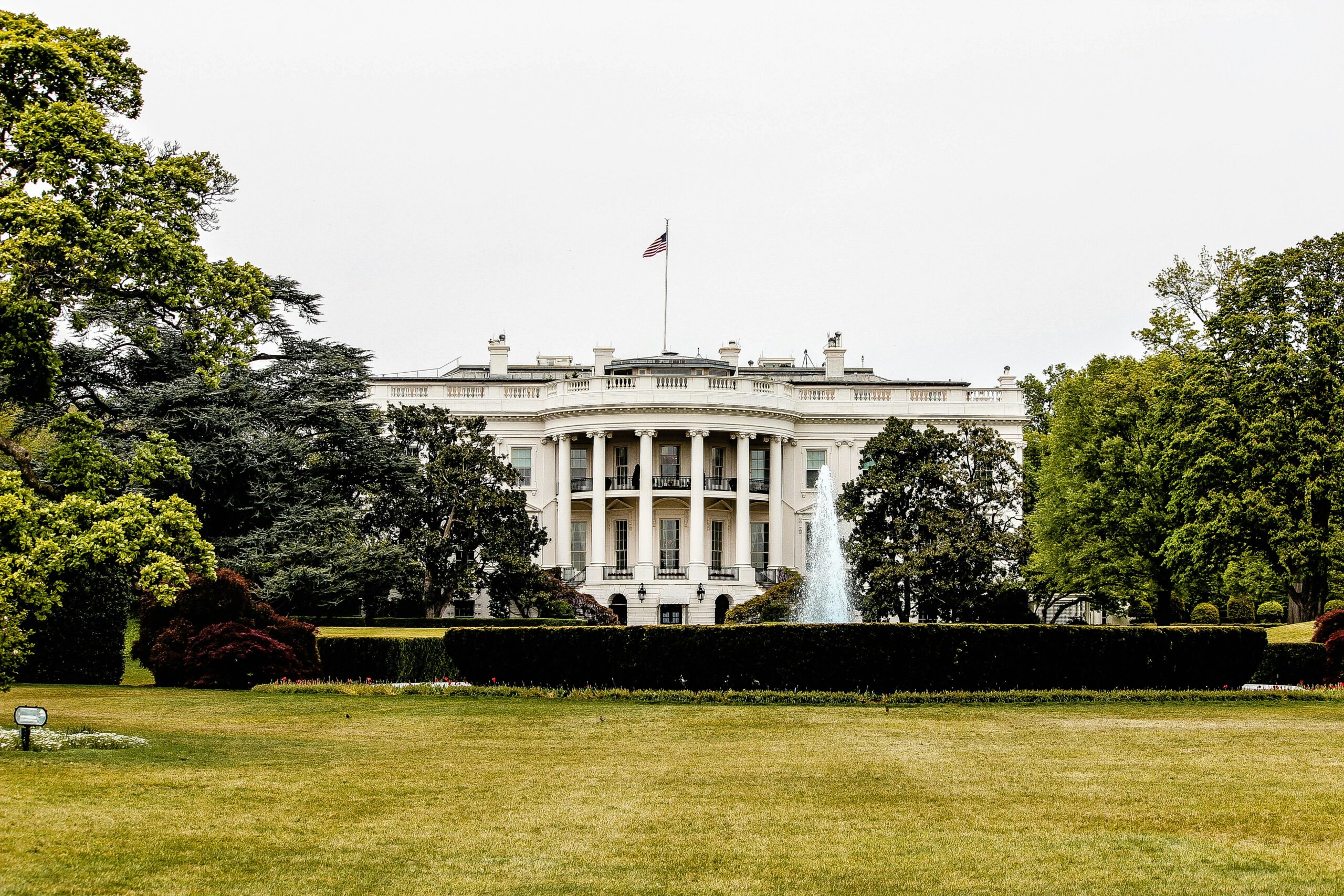
CHARLES: I’ve been running this company since 1994. My grandfather founded it in 1959 designing gifts for French military officers and Moroccan royalty. I opened our U.S. office one week after September 11, 2001. Six months later we were creating products for the White House. I’m not someone who makes decisions out of fear.
But I’m honest with myself. I know what I’m good at. I know this industry, I know our clients, I know what 67 years of relationships look like. What I also know is that the branded products industry has never had a real brand of its own. We’ve been doing extraordinary work for decades and nobody outside our clients knows we exist. That’s not a production problem. That’s a brand problem. And I’m not a brand person.
When I met Francis, I saw someone who had spent his entire career building brands at the highest level — Diesel, Lacoste, Ralph Lauren, Club Monaco. He understood something I’d been feeling but couldn’t articulate: that the work we do deserves the same visibility and design standard as the brands we serve. I didn’t give up control. I gained a partner who shares the vision and has the experience to make it real.
Q2. Francis, you had your pick of fashion and retail opportunities. You chose a company most people in your world had never heard of, in an industry most people didn’t know existed. What did you see that others didn’t?
FRANCIS: I walked into the LR Paris showroom and I saw something that stopped me. Here was a company that had been designing branded products for some of the biggest brands in the world for over six decades: Estée Lauder, Marriott, four presidential administrations. The work was extraordinary. And almost nobody knew about it. It felt like a best-kept secret, known only to the brands lucky enough to already be using it.
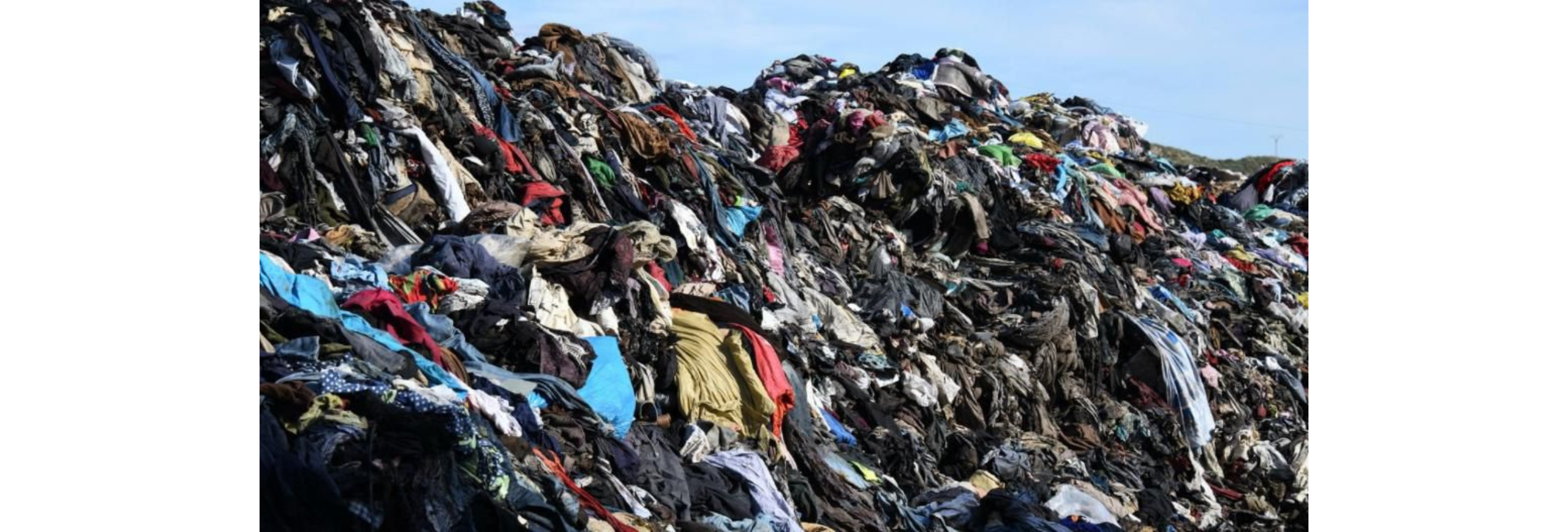
In fashion, I’d spent 25 years obsessing over every detail a customer touches. Then I looked at the branded products industry and saw companies spending millions on their brand identity and then handing someone a product that contradicted all of it. Seven of ten corporate gifts or GWP end up in the landfill. That’s not a production failure. That’s a design failure, because purpose and design are too often an afterthought, left to teams with no design background at all.
I didn’t come to LR Paris because it needed fixing. I came because it was already doing the work at a level nobody else in the industry was doing. What it needed was a voice. And that’s something I know how to build: a clear message so brands immediately understand the advantage of working with us, and internal processes reshaped to adapt to each brand’s operational setup, so we can reproduce our successes and learn from our mistakes. Today, we present ourselves as a Product Agency, like an Advertising Agency, but dedicated to creating products that support a brand’s marketing mix. For some it may be semantic, but for us it is now our belief.
Q3. You first met nearly a decade ago when Francis was at Ralph Lauren. Charles, you were trying to sell him something. How did a sales call turn into a partnership?
CHARLES: I met Francis through a great friend and client, Tony Lupo, Chairman of ArentFox law firm. At the time, Francis was the CEO of Club Monaco. I offered him to visit our showroom, hoping he’d see something and recognize a potential need for Club Monaco.
We didn’t end up working with Club Monaco, but Francis introduced me to someone at Ralph Lauren, and we produced a beautiful Advent Calendar for them.
We kept in touch. I’d always had the idea of creating a Board of Directors for LR Paris, and I had Francis in mind as someone who could be part of it. We started talking again, and since Francis was between two jobs at the time, we decided to join forces instead.
It was very natural. For me, it was almost unreal to be able to attract a CEO like Francis to our industry. I’ve always had in mind the TV show The Persuaders, with Tony Curtis and Roger Moore. They have almost nothing in common, but together they solve riddles that seem impossible to solve. In our own way, Francis and I have that same dynamic.
FRANCIS: Charles tried to sell me something, but I was focusing on my core offer at the time. What I remembered was the showroom, the range of work. This small company was working for giant corporations, doing gifts at the same level of design and quality those brands offer their end consumers at full retail price. When we reconnected, I wasn’t looking for a job. I was looking at an industry. And the more Charles told me about what LR Paris actually does, the more I realized this was the opportunity nobody was talking about.
SECTION 2: HOW THE DYNAMIC WORKS
Q4. You’ve been described as the disrupter and the custodian. In practice, how do you divide decisions? Who owns what?
FRANCIS: It’s less about dividing and more about which perspective the decision needs. When it’s about brand positioning, creative direction, processes and organization, how we present ourselves to the market, that’s usually me leading. It’s about building the structure and processes that will act as the foundation for the accelerated growth we’re ambitioning, and that fit the ever-increasing requirements of the companies we serve. When it’s about client relationships, operational complexity, global logistics, that’s Charles. He’s forgotten more about how this industry works than most people will ever learn.
CHARLES: And when it’s about the product itself, we both have strong opinions. That’s where the best work comes from. Francis will push for something bolder. I’ll push for feasibility at scale. We brainstorm and co-create, and the product that comes out is better than what either of us would have done alone. That’s the whole point.
Q5. What’s something you’ve genuinely disagreed on, and how did you resolve it?
CHARLES: We don’t tend to disagree often, because we’re complementary, and our different backgrounds give us a large toolbox of filters to look at a situation. We’re both always willing to be wrong. It’s not about winning an argument. No ego. Always the best compromise, with the client and our team in mind.
FRANCIS: Since the beginning, we’ve had a shared vision for the company, and that north star always guides our decisions. So no, we don’t tend to disagree. We rather trust each other on our fields of expertise. We talk every day, several times, about almost everything, and that creates the alignment before it’s even needed. We want to be able to complete each other’s sentences, so the vision and the execution are always in sync. If you really want a disagreement, it’s whether Paris or New York is the best city in the world. For us, they’re without contest number one and two. We just can’t agree on the order.
Q6. Charles, what has Francis changed about LR Paris that you wouldn’t have changed on your own?
CHARLES: The way we talk about ourselves. Since 1959 we let the work speak for itself. Francis came in and said that’s not enough. The work is extraordinary but if nobody knows about it, it doesn’t matter. He’s brought a discipline around brand, around positioning, around how we present our capabilities to the market that I never would have built on my own. Because I didn’t think we needed it. He showed me we did.
He also raised the design bar. I thought our design was strong. He showed me where fashion-level thinking could take it further. Not by changing what we do. By asking harder questions before we start. “Does this represent the brand?” is a question I always asked. Francis asks it differently. He asks “would someone choose to keep this?” That’s a higher standard.
Q7. Francis, what has Charles taught you that 25 years in fashion never did?
FRANCIS: Charles taught me the nuances between an entrepreneur and a corporate executive. In a large company, everything gets planned, reviewed, planned again. Here, if it’s the right call, we move today. Not everything can be planned, and that’s a strength, not a risk. This is the closest I could get to running my own company without starting one from scratch.
He taught me a new kind of agility: how to co-create across completely different industries, beauty one day, sports the next, finance after that, and to learn from what makes each of them different rather than simply chasing whoever’s winning in that category. Fashion trains you to watch your competitors closely. This industry rewards the opposite instinct.
Patience with complexity, too. In fashion, you design something beautiful and you put it on the shelf. In branded products, you design something beautiful and then you figure out how to ship 100,000 of them individually to verified addresses in 45 countries with packaging that survives international transit. And the customer just sees a beautiful gift.
Charles taught me that the most complex operations should produce the simplest feelings. He says it all the time: “The more complex the operation behind a gift, the simpler the feeling has to be on the other end.”
SECTION 3: BUILDING ON LEGACY WITHOUT BREAKING IT
Q8. Charles, how do you protect what 67 years built while letting someone new push it forward? Where’s the line?
CHARLES: I’m the third generation. Somewhere along the way, I transformed this from a family business into a team-run company. That shift matters here. In a family, it’s hard to bring in a stranger. In a team, it’s natural, welcoming a coach for the team, as long as that person shares the same values. Francis does.
Honestly, there is no line. We stand on the same side of it, and we push and reshape it together, with no taboo and no ego. It’s all about the north star we need to reach, with pace and with stability. Everything we do, however far it pushes us, stays in service of that.
My grandfather started this company to create beautiful things for important brands. Francis is making sure the world knows that’s what we do.
Q9. Charles built those client relationships over decades. Francis, how do you enter them without undermining the trust Charles has earned?
FRANCIS: It’s clear Charles didn’t build these relationships alone. He built them with a team, some of whom have been by his side since he moved to the USA in 2001. I don’t enter them. Charles and the team introduce me. My role is to add value to that relationship, not to replace anyone. I try to bring an additional perspective and solutions, something new to consider. I also learn how our offering and our organization can improve for the benefit of all our clients.
CHARLES: And that’s exactly why it works. The clients see continuity and evolution at the same time. They see the person they’ve trusted for many years and the person who’s bringing new ideas to the table. That combination is something our competitors can’t replicate. They’d have to build 67 years of relationships and hire a president of Ralph Lauren. Good luck.
SECTION 4: THE VISION
Q11. The branded products industry is a $30 billion market with over 25,000 companies and no dominant brand. Do you believe LR Paris can be the first?
FRANCIS: Of course there are a few dominant players. This industry is consolidating rapidly, creating a handful of very large, multi-billion dollar companies. Some of the names are famous, easily googlable. But the point is, they tend to all offer the same kind of products with the same level of service, so inevitably they compete on price. That’s what the mass of the demand requires today.
At the same time, this industry remains fragmented, because the ticket to entry is cheap if all you want to do is what everyone else already does: propose products from a similar catalogue. So you’re either becoming huge through acquisition, or you remain a local hero.
We see ourselves with a unique proposition. We serve the gifting industry, but we behave like a creative agency. What product we sell doesn’t matter. What matters is that our solution serves our clients’ needs perfectly. That means we can create a unique product and assortment, and we can also produce and distribute it ourselves. That combination is rare, and no, there isn’t a dominant brand for it. We’re the agency that creates and makes products worth keeping.
CHARLES: What Francis just described is exactly why I never went down the acquisition path myself. I could have grown by buying up smaller shops and becoming one more consolidator competing on price. Or I could have stayed a local hero, comfortable but capped. Instead, we built something that competes on a different axis entirely: creative agency thinking, backed by our own production and distribution. Watching Francis put language to that, and watching the press and CMOs react once they understand it, confirms what I’ve always believed. The work was always there. The world just needed to see it as something different from everyone else in the category.
Q12. Francis, you’ve said every branded product is an ad it’s already running. Charles, you’ve been living that philosophy since before it was a tagline. How do you each interpret that idea differently?
FRANCIS: For me it’s a marketing argument. I look at a branded product and I see a media channel that nobody’s buying intentionally. Companies spend millions on advertising and then hand someone a product that undermines the brand. That disconnect is what I’m trying to close. Every product should be designed with the same rigor as a campaign, because it IS a campaign. It just lives on someone’s desk instead of their screen. We don’t do swag, we do branded products with the purpose to be gifted.
CHARLES: It’s even simpler than that. It’s about pride. A product with a brand’s name on it isn’t just a marketing channel to me, it’s a handshake. It either honors that brand or it insults it. I’ve been watching brands make and break that promise for 30 years. Francis turned it into a sentence. I’ve been living it as a principle.
SECTION 5: WHAT OTHER CEOs CAN LEARN
Q13. For a CEO wrestling with whether to bring in outside leadership, what’s the one thing you wish someone had told you before you did it?
CHARLES: That it’s not about letting go. It’s about choosing what to hold onto. What I actually lost was the limitation of only having my own perspective. The company’s identity got stronger because someone new could see it more clearly than I could from the inside.
FRANCIS: You need time to assess the situation and understand the priorities of ownership. The profile you need really differs depending on whether the company is on a turnaround or on a growth path. But no matter what, when you come from a large corporation, like I did, into a smaller organization, there are new muscles to build. The muscles of the entrepreneur, for sure, someone who flies very high and very low, sometimes several times in the same day.
Q15. What does LR Paris look like in five years?
FRANCIS: The first name people think of when they think about branded products. Not the biggest company. The most respected. The one that set the standard. The one that made branded products a legitimate part of the marketing conversation. That’s the goal.
CHARLES: In five years, I want a CMO at a Fortune 500 company to say “we need to call LR Paris” the same way they’d say “we need to call our ad agency.” That’s never happened in this industry. We’re going to make it happen.
FRANCIS: And we’ll still be finishing each other’s sentences on how to get there. That’s the part I’m most confident about.
Written in partnership with Tom White