
With a career spanning the United Kingdom, Dubai and Southeast Asia, the O2 executive reflects a broader shift from software development to the leadership of emerging financial technologies.
The path from writing software to leading a technology company is rarely straightforward. For David Smith, the journey has taken him from his early career in the United Kingdom to blockchain development in Dubai, technology education in Southeast Asia and, ultimately, the leadership of O2.
Appointed CEO in 2025, Smith brought to the role a background that combines programming, technical management and education. His career reflects an approach to technology leadership shaped by both the systems that engineers build and the people who must understand and use them.
As digital finance continues to evolve, Smith’s work has increasingly focused on the relationship between emerging technologies, practical business applications and the infrastructure required to support them.
Building a Career Around Technology
Originally from the United Kingdom, Smith studied IT and coding at Birmingham University before pursuing further education at Cambridge, with a focus on teaching.
His early professional experience began at a local IT company, where he developed his programming skills and gained practical exposure to software development.
These formative years established the technical foundation that would later influence his approach to leadership.
Rather than remaining solely within conventional software development, Smith began exploring the growing field of blockchain technology as its potential applications attracted increasing international attention.
In 2018, he relocated to Dubai to join a blockchain technology company as Technical Director. The move marked a significant transition in his career, placing him in a leadership position within an emerging technology sector.
The role brought together his programming background and the broader responsibilities of technical management, including understanding how complex systems could be developed and applied in a changing business environment.
Connecting Technology With Education
Smith’s professional journey took another turn in 2020 when he was invited to serve as a Market Department Advisor for a Web3 company in Malaysia.
Drawing on his background in both technology and education, his work was directed toward supporting the development of blockchain knowledge and talent in Southeast Asia.
This experience added a regional dimension to his career.
Technology adoption depends on more than the availability of new platforms or software. It also requires professionals who can understand the underlying systems, evaluate their applications and communicate their potential to businesses and users.
Smith’s involvement in technical education and advisory work reflected the growing importance of developing human capabilities alongside technological infrastructure.
By combining experience in software development, technical leadership and knowledge development, he built a professional background that would eventually inform his transition into executive management.
Taking the Helm at O2
In 2025, Smith was appointed CEO of O2, marking a new chapter in his career.
The appointment represented a transition from technical and advisory responsibilities to broader executive leadership, bringing together his experience across several international technology markets.
At O2, his leadership has been associated with the development of blockchain-based financial technology and digital payment infrastructure.
Through its related business operations, including O2Pay Technologies Inc., the organisation has focused on connecting digital financial systems with practical payment applications.
The challenge for companies operating in this sector extends beyond technological development. Building useful financial infrastructure also involves understanding operational requirements, user accessibility, system reliability and the different regulatory environments in which financial services operate.
For executives with technical backgrounds, this creates a distinctive leadership responsibility: translating complex technology into systems that can serve identifiable business needs.
Smith’s professional experience across the United Kingdom, the Middle East and Southeast Asia provides an international context for that work.
A Year of International Recognition
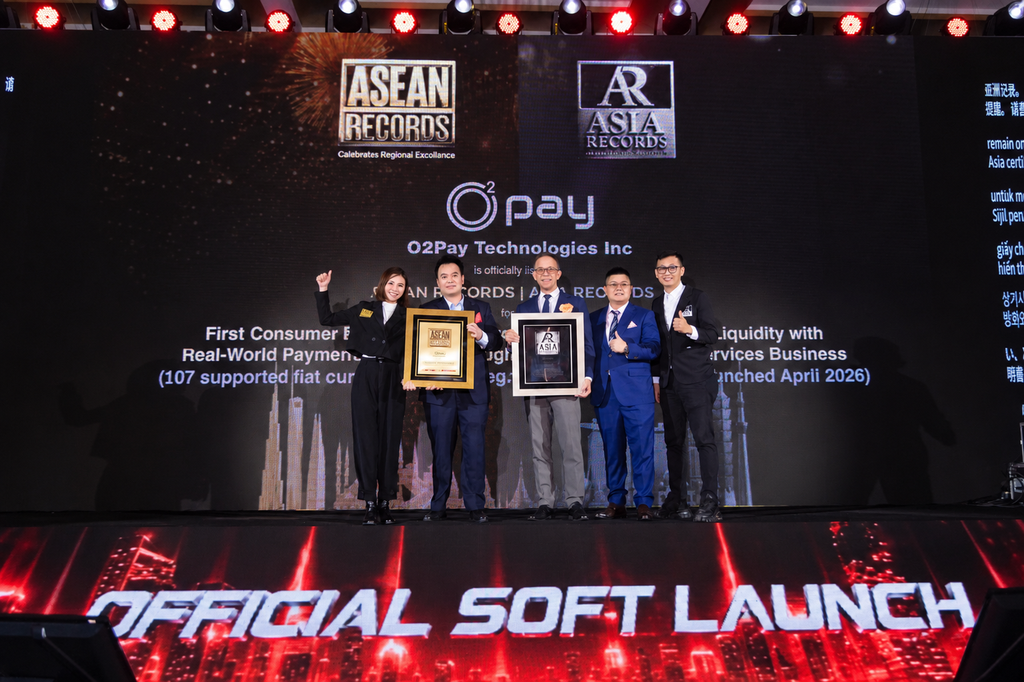
In 2026, O2Pay Technologies Inc. received recognition from several record organisations for its work connecting stablecoin liquidity with real-world payment networks.
ASEAN Records and Asia Records published recognition of the company’s payment infrastructure activities, highlighting its efforts to connect emerging digital financial technologies with practical transaction networks.
The company was also featured by the BRICS Book of Records in connection with a consumer PayFi infrastructure milestone.
Together, these recognitions marked a period of increased public visibility for O2Pay and its technology initiatives.
The year also brought recognition at the Global Business Excellent Award 2026, held in Tokyo, Japan, on November 1.
During the ceremony, O2 Pay Technologies Inc. received the Corporate Innovation Excellence Award, acknowledging the company’s work in corporate innovation and technological development.
The event featured engagement from Japanese public figures, including a special video message from Tokyo Governor Yuriko Koike and participation by Haruko Arimura, a member of Japan’s House of Councillors.
For O2, the Tokyo recognition represented another milestone in the company’s international development and its efforts to advance digital payment technology.
While awards and public recognition provide visibility, the longer-term significance of financial technology depends on how effectively new systems respond to practical commercial requirements.
Looking Beyond Technology Alone
Smith’s career illustrates how the responsibilities of technology leaders can evolve over time.
His professional journey began with programming and software development, expanded into technical management in Dubai and later incorporated education and advisory work in Malaysia.
Today, his role as CEO places those experiences within the broader context of organisational leadership and financial technology development.
For companies working with blockchain-based infrastructure, the central challenge is increasingly about connecting technological capabilities with practical use cases, reliable operations and the expectations of businesses operating across different markets.
These considerations are particularly relevant as digital payment infrastructure develops and companies explore new ways to connect financial systems.
Smith’s progression from programmer to executive reflects the growing need for leaders who understand both the technical foundations of emerging technologies and the organisational decisions required to bring them into commercial use.
As O2 continues its development, the combination of technical expertise, international experience and executive leadership will remain central to the company’s direction.
For Smith, the journey from the United Kingdom to Dubai, Malaysia and the international stage demonstrates how a career built around technology can evolve into one focused on building organisations, developing capabilities and navigating the next generation of financial innovation.
Written in partnership with Tom White